before the Spectator transcends the earth
score for video production (2025)
Dedicated to Chris Lee, with admiration and gratitude
*
Statement
content note: verbal references to relations of imperialism and genocide, and to tactics of imperialism including militarism, pollution, and plunder
Canonical Western art music Aesthetics frequently position this field as the epitome of a certain kind of transcendence of the earthly. The art music field often either assumes this positioning to be inherently good or wields it as a defense against politicized critique. The present piece instead considers that art music’s valorization of the transcendence of the earthly actually indexes and conceals the field’s intense complicities with Western imperialism’s violent abstraction of the earth. Indeed, historically, the very possibility of conceptualizing art music’s beholder as transcendent was founded on imperial conceptualizations of the planetary, from the racializing articulation of the Spectator through the imposition of the position of the Savage/Primitive on a planetary scale and the instrumentalization of a global “empire” of examples of this figure as a foil for Spectatorial sensory capacity (e.g. Immanuel Kant, Critique of Judgement; Eduard Hanslick, On the Musically Beautiful)—to the explicit alignment of Aesthetics with violent Civilizationist logics that undergirded the first global empires (e.g. Kant’s references to writings of Spanish conquistadors), empires whose genocides were so unfathomably catastrophic that they may have modulated climate on a planetary scale. The present piece maps how banal and rarely interrogated protocols of art music performance, notation, and form (re)produce a similar kind of imperial abstraction visually, collapsing an entire living planet into an art hall stage, if not into a page. This mode of abstraction is predicated on the radical remaking of sovereign Indigenous land, which, as Indigenous studies scholar Glen Coulthard (Yellowknives Dene) notes, is often constituted by place-based reciprocal care-taking relations, into abstract, interchangeable, manipulable space. For graphic design scholar and artist Chris Lee, this kind of imperial abstraction often operates via “the miniaturization of the world made available to a commanding, synoptic gaze, that enables a capacity to transpose the measurements, calculations, and plans of one world upon another.” For Lee, a key medium for this operation is the two-dimensional space of the print document and particularly the map because, as Bruno Latour notes, “there is nothing you can dominate as easily as a flat surface of a few square meters.”
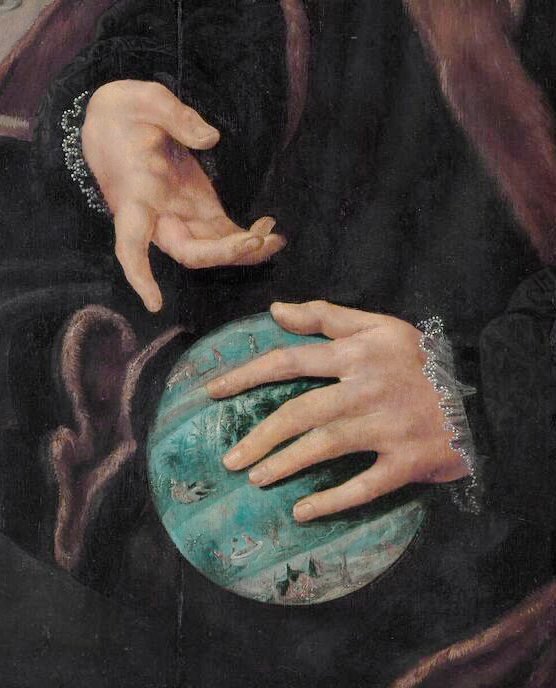
The present piece traces how this imperial geographic abstraction is normalized in and through routine protocols of the metropolitan cultural practice of art music, specifically through 1) instrumentations (e.g. arrangements of musical instruments on a stage, verbal listings of isntruments on a page) whose appropriated instruments (especially those known to Western imperial taxonomy and art music as “percussion”) display, naturalize, and gloat in imperial plunder on a planetary scale, and 2) titles of sections/movements of a piece that perform an imperial movement of conquest, plunder, taxonomizing, etc. on a global scale (e.g. Les Indes Galantes, JP Rameau; The Nutcracker, PI Tchaikovsky; Carnival of the Animals, Camille Saint-Saëns; Hymnen, Karlheinz Stockhausen). Through the two-dimensional space of the stage and page, both of these examples hail a Spectatorial subject who literally looks down on a miniaturized and flattened planet, a subject coterminous with the historically earlier Spectator hailed by imperial world maps. Read against these instances of imperial geographic abstraction, art music’s claim to transcend the earthly should thus be understood as actively normalizing the imperial abstraction-destruction of the entire earth, while also effacing this complicity. This latter effect needs to be framed as what the late philosopher Charles Mills calls white ignorance and what anthropologist Nadia El-Shaarawi calls imperial unknowing, regimes of ignorance that are founded on privilege and reproduce domination. Likewise, in the context of this visual abstraction, art music’s prevalent framework of music-as-sound should similarly be understood as reproducing white, imperial power through ignorance.
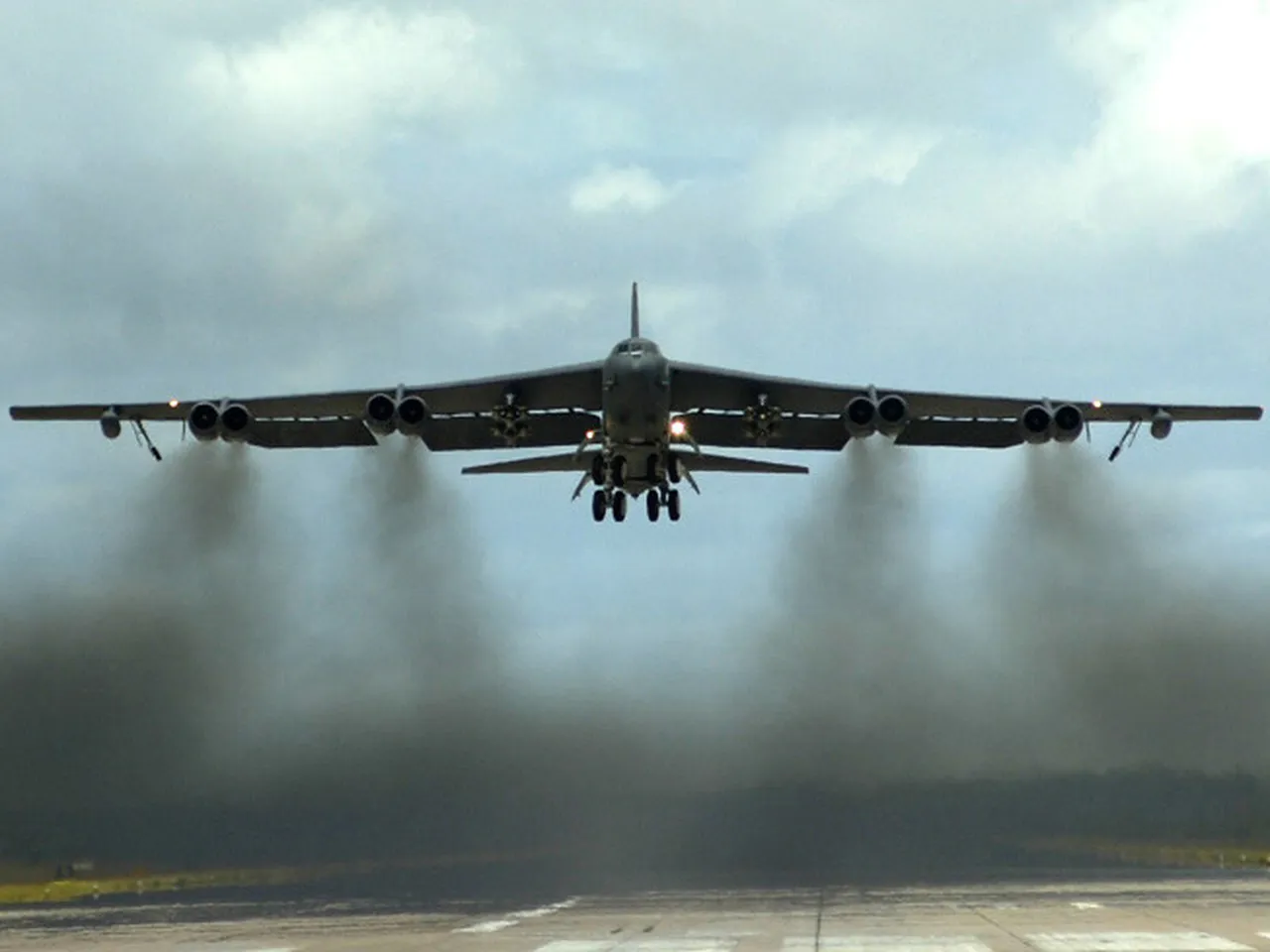
Specifically, the piece codifies a score for marking images of stages and printed matter with audio of a large jet plane taking off, through the medium of video. Here, the jet is meant as an index of 1) the technological preconditions for an aerial view of the earth, 2) a technology that has enforced imperial sovereignty through actual and threatened violence, in the nuclear era threatened on a planetary scale, 3) a technology of transportation that has allowed empire relate to place as space, attacking and plundering anywhere on earth, and 4) a technology implicated in pumping unimaginable quantities of toxins (“carbon emissions”) into the earth’s atmosphere, in turn modulating climate on a planetary scale. While the jet emerged in the mid twentieth century, the piece approaches the jet as the manifestation of much longer-standing imperial desires to relate to land not only as space but, even more disturbingly, as a bounded, inert globe. These desires might be traced to key moments of early modern European imperialism. The 1494 Treaty of Tordesillas scored the earth with a graphic line drawn from Arctic to Antarctic poles, dividing the earth’s “resources” between rival Spanish and Portuguese empires. Slightly later, European world maps and especially globes miniaturized the earth, collapsing the earth-as-globe into a banal(ized) household object that is literally at the fingertips of the viewer.
While the piece responds to histories that began long ago, its intervention is as urgent as ever. Following the watershed emergence of the Rockefeller, Ford, and Carnegie Foundations in the early 20th century, which distributed funds linked to the extraction and/or burning of fossil fuels, art music has become increasingly entwined with fossil fuels and their capacity to alter climate on a planetary scale. This funding relationship artwashes these corporations’ images, abstracting agents of imperial destruction on a planetary scale into “donors,” “supporters,” and cultivated Aesthetic subjects, from Carnegie Hall to the Imperial Oil Opera Theatre to the Texaco Metropolitan Opera Broadcast. It is perhaps in part because banal protocols of performance, notation, and form naturalize imperial abstraction that the very perpetrators of this abstraction are drawn to art music as a vehicle for rehabilitating their image and moving their ill-gotten capital into the metropole.
This piece is dedicated to my friend and collaborator Chris Lee. Encountering Chris’s politically-committed, ambitious artistic and scholarly research on the politics of graphic design emboldened me to ask similar questions about my similarly positivistic, “apolitical” field of Western art music at a crucial moment in my artistic trajectory. This piece is an expression of gratitude to Chris for years of conversations and company.
*
*
Realization of movement titles of The Nutcracker, Piotr Tchaikovsky
*
Realization with the instrumentation of Le Marteau sans Maître, Pierre Boulez
 Colin Tucker [artist]